






Ensuring Quality at Every Step
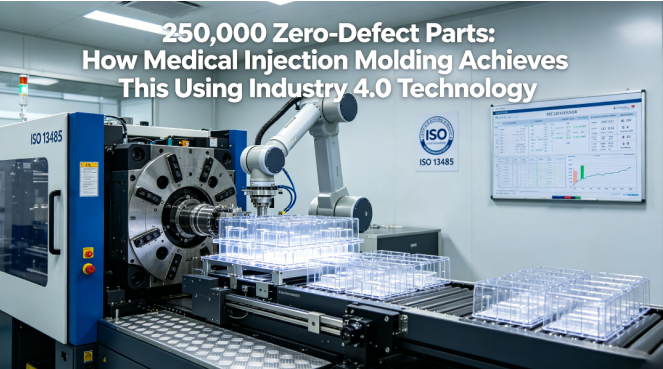
Throughout the entire Precision Mold Medical process, mold inspection and testing are critical to ensuring that the final medical device is safe, functional, and meets the required standards. Each stage of the process, from initial mold creation to final part testing, incorporates thorough inspection and testing protocols to maintain quality control.
At FUJIU Medical Injection Mold, their extensive experience and commitment to excellence ensure that all molds undergo rigorous inspection and testing. With over 20 years of expertise, FUJIU is dedicated to providing high-quality medical components that adhere to stringent regulatory and performance standards, ensuring safety and reliability throughout the production process.
Below is an in-depth look at how mold inspection and testing are integrated into each phase to ensure that every medical device component is compliant with stringent regulatory and performance standards.
Initial Mold Inspection
Once the mold has been created, it undergoes an initial mold inspection to ensure that the mold’s dimensions and tolerances are within the required specifications. This inspection is crucial in identifying any discrepancies early in the process. At this stage, the precision of the mold is evaluated, including the geometry of cavities, parting lines, and any other features that will affect the molding process.
If any issues are identified, such as incorrect dimensions or imperfections, they can be corrected before production begins. Addressing these issues early ensures that the mold will produce high-quality parts in subsequent production runs, avoiding costly delays or defects in the final medical device. The Precision Mold Medical process emphasizes this first step of inspection to guarantee that the mold will function as intended throughout its lifespan, especially in the Medical Injection Molding process, where accuracy is critical.
Mold Testing
After the initial mold inspection, mold testing is carried out during the first batch of molded parts. This step is critical for confirming that the mold is producing parts that meet all of the design specifications. The purpose of mold testing is to ensure the quality of the molded parts by checking for:
- Dimensional Accuracy: Ensuring that each part produced by the mold aligns with the required dimensions and tolerances. Even the slightest deviation can result in defective or unsafe medical devices.
- Material Consistency: Verifying that the chosen material fills the mold uniformly, with no variations in material composition that could affect the quality, strength, or performance of the molded parts.
- Surface Quality: Examining the surface finish for any defects, such as blemishes, voids, or roughness, which could affect the functionality or aesthetic appeal of the final medical device. This step is particularly important for medical devices that require a smooth, clean surface, such as surgical tools or implant components.
If any issues arise during mold testing, the mold may be adjusted or repaired to address the problem before continuing with production. This ensures that the mold is capable of producing parts that meet the required quality standards consistently.
Final Part Testing and Inspection
Once the parts have been molded, they undergo a rigorous Precision Mold Medical final inspection to ensure they meet both functional and aesthetic requirements. This final part of the inspection process includes several tests designed to verify the overall performance and appearance of the molded components:
- Dimensional Checks: After the molding process is complete, dimensional accuracy is checked once more to confirm that each part meets the design specifications. This step may involve using tools like Coordinate Measuring Machines (CMMs), which measure the part in three dimensions to ensure that it is within tolerance.
- Visual Inspections: A detailed visual inspection is performed to ensure that the parts are free from surface defects such as cracks, scratches, or discoloration. Visual defects can impact both the functionality and safety of the medical device, so this step ensures that the parts are acceptable for use.
- Functional Testing: For critical components, functional testing is performed to verify the part’s performance in real-world conditions. For example, if the molded part is a component of a surgical tool or medical implant, additional tests such as stress testing, leak testing, or pressure testing may be required to ensure the part will function as intended under operational conditions. This ensures that the medical device performs reliably when used in the field.
The final part inspection is the last line of defense to confirm that the parts produced meet the required safety standards. Any failure to meet the specifications at this stage would result in rejecting the part and potentially reworking the mold or design.