





Missing teeth can impact more than your smile — they can affect your speech, ability to eat comfortably, and even your self-confidence. Fortunately, modern dentistry offers several effective solutions: dental bridges, dentures, and implants. But how do you know which one is right for you? Let’s explore the differences, benefits, and considerations of each to help you make an informed decision.
Dental Bridges: A Fixed Middle Ground
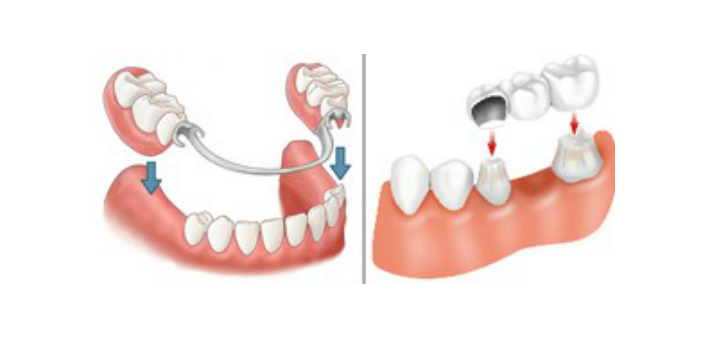
A dental bridge is a fixed prosthetic that is used to fill the gap created by one or more missing teeth. It typically involves placing crowns on the adjacent teeth (called abutment teeth) with a false tooth or teeth in between.
Pros:
- Non-surgical procedure
- Faster than implants
- Less expensive upfront
Cons:
- Requires alteration of healthy adjacent teeth
- May not last as long as implants
- Bone loss in the jaw can still occur over time
Bridges can be an great option if the neighboring teeth already need crowns or fillings. However, they do not offer the same longevity or bone preservation benefits as implants.
Dentures: Affordable and Removable
Dentures are removable prosthetics that replace missing teeth. They can either be full (replacing an entire arch) or partial (replacing several missing teeth in one area).
Pros:
- Cost-effective, especially for multiple missing teeth
- Non-invasive and quick to produce
- Easy to adjust or remake if needed
Cons:
- Can slip or move while eating or speaking
- Require daily removal and cleaning
- May cause discomfort or sore spots
Dentures are ideal for individuals looking for a low-cost solution, especially when many teeth are missing. However, they may not offer the same level of comfort or function as more permanent options.
Dental Implants: A Permanent Solution
Dental implants are titanium posts that are surgically inserted into the jawbone to act as roots for artificial teeth. Once healed, they provide a stable and long-lasting foundation for crowns, bridges, or dentures.
Pros:
- Preserve jawbone health and facial structure
- Imitate the look and function of natural teeth
- High success rate and durability
Cons:
- Higher initial cost
- Requires surgery and a longer healing period
- Not suitable for everyone (e.g., people with insufficient bone density or certain medical conditions)
Implants are often the gold standard for those seeking a long-term, natural-feeling solution. They also help prevent the bone loss that typically follows tooth loss.
If you’re considering implants, it’s worth exploring options with experienced specialists. Many patients find West London dental implants to be a trusted and professional choice, offering thorough assessments and tailored treatment plans.
So, Which One Is Right for You?
Your best choice depends on your oral health, budget, and personal preferences. Bridges offer a middle ground between functionality and cost, dentures provide an affordable fix for widespread tooth loss, and implants deliver the closest thing to natural teeth.
Consulting with your dentist is key. They can evaluate your needs and recommend the most suitable option. Remember, replacing missing teeth isn’t just about aesthetics — it’s about protecting your oral health and restoring your quality of life.