

Bruxism and sleep apnea often appear together, but the link is not always simple. Some people clench their teeth at night because of stress, while others may do so during breathing disruptions that briefly wake them.
Are the Two Conditions Connected?
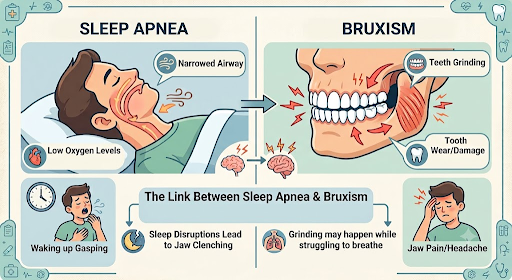
Can sleep apnea cause bruxism? It may contribute to the condition in some people, but not every case has the same cause. Many people with breathing interruptions during sleep also grind their teeth at night, but the relationship may depend on age, medical history, medications, stress, and airway function.
Sleep apnea is a sleep disorder in which breathing repeatedly stops, slows, or becomes blocked during the night. This can interrupt rest, reduce sleep quality, and cause symptoms such as snoring, gasping, morning headaches, dry mouth, and daytime tiredness.
Bruxism is the habit of clenching or grinding your teeth, often during sleep. It can cause jaw pain, tooth wear, tooth sensitivity, headaches, and facial tension. When bruxism and sleep apnea occur together, the body may respond to breathing interruptions by activating the jaw muscles, leading to nighttime grinding.
Why Breathing Problems Trigger Grinding
Obstructive sleep apnea and bruxism may be connected through repeated pauses in breathing. Blocked or reduced airflow can cause brief awakenings that activate the body. During these moments, the nervous system becomes more alert, breathing restarts, and the jaw may move.
Apnea-related teeth grinding may occur when an airway obstruction activates the jaw muscles. This movement may briefly reposition the jaw or airway, but it can also strain the teeth and jaw joints over time. This does not mean that grinding corrects the breathing problem.
Obstructive sleep apnea (OSA) is a condition that requires a proper diagnosis. A dental exam can show damage, but it cannot measure breathing pauses, oxygen changes, or sleep-stage disruptions.
Signs You Should Not Ignore
Night grinding can look minor at first. The problem is that dental damage often develops gradually. You may not notice it until a dentist sees tooth wear or you start waking with facial tension.
Common signs include:
- Morning jaw pain or tightness
- Flattened, chipped, or sensitive teeth
- Headaches near the temples
- Clicking or soreness near the jaw joint
- Snoring, choking, or gasping during sleep
- Tiredness after a full night in bed
These signs matter because dental health and sleep-related breathing problems can overlap. Teeth grinding may signal sleep apnea when it occurs alongside daytime sleepiness, loud snoring, gasping, or morning headaches. If a partner says that you grind your teeth, they likely hear grinding sounds during the night. This observation can help guide the next step.
An evaluation with Dr. Waise Ebrahimi may help connect signs of dental damage with possible sleep-related symptoms.
Comparing Dental and Sleep Clues
Nighttime grinding and sleep problems can share symptoms, so it helps to understand what each sign may suggest.
| Clue | What It May Suggest |
| Worn enamel, sore teeth, tight cheeks | Nighttime clenching or grinding |
| Loud snoring, gasping, dry mouth | Possible breathing disruption |
| Morning headaches and fatigue | Poor sleep quality |
| Jaw clicking or locking | Possible temporomandibular joint (TMJ) disorder |
| Symptoms that change with stress | Stress-related grinding may play a role |
This table does not replace diagnosis. It helps you decide whether to speak with a dentist, a sleep physician, or both.
Treatment Options That May Help
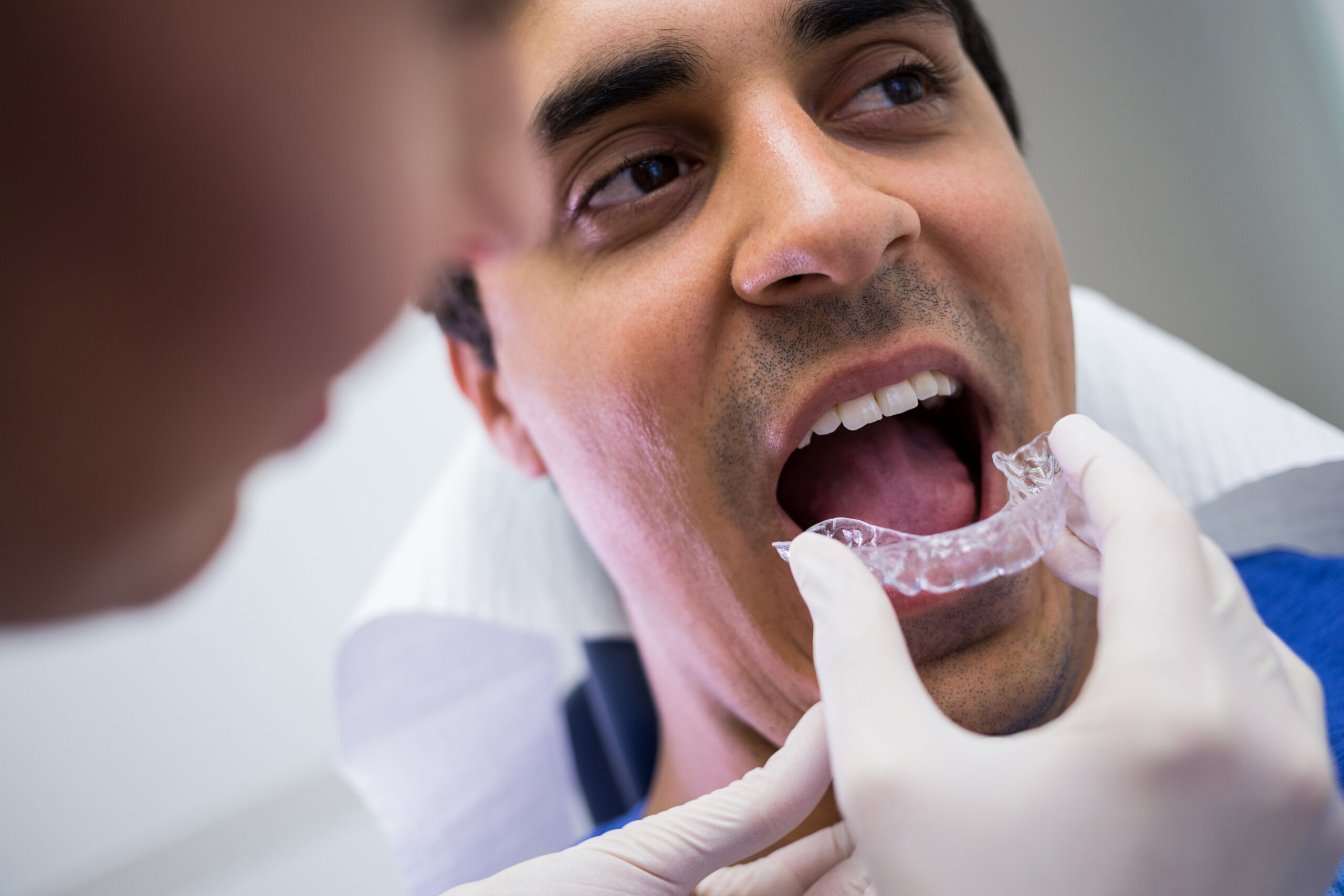
Treatment should match the cause. A basic night guard can protect your teeth from grinding damage, but it does not open the airway or treat sleep apnea. That distinction matters.
Possible options include:
- Mandibular advancement devices (MADs) for selected patients
- Oral appliance therapy provided by a trained professional
- Medication review when prescriptions may worsen grinding
- Stress management when tension drives nighttime jaw activity
- Sleep-position changes when symptoms worsen on the back
Dental sleep medicine focuses on the overlap between breathing, bite, jaw position, and dental damage. In some cases, an oral appliance may move the lower jaw forward, helping reduce airway obstruction.
What to Do Next
Do not assume that every night guard addresses the underlying problem. A guard can reduce enamel damage, but untreated breathing disruptions may still affect sleep quality, energy, mood, and overall health.
Start with what you can observe. Track snoring, morning headaches, dry mouth, facial soreness, and daytime fatigue for two weeks. Ask a sleep partner what they notice. Then share those details with the right clinician.
The best plan protects your teeth while also evaluating possible breathing problems. That approach gives you a clearer answer, reduces guesswork, and helps you choose care that targets the real cause.