






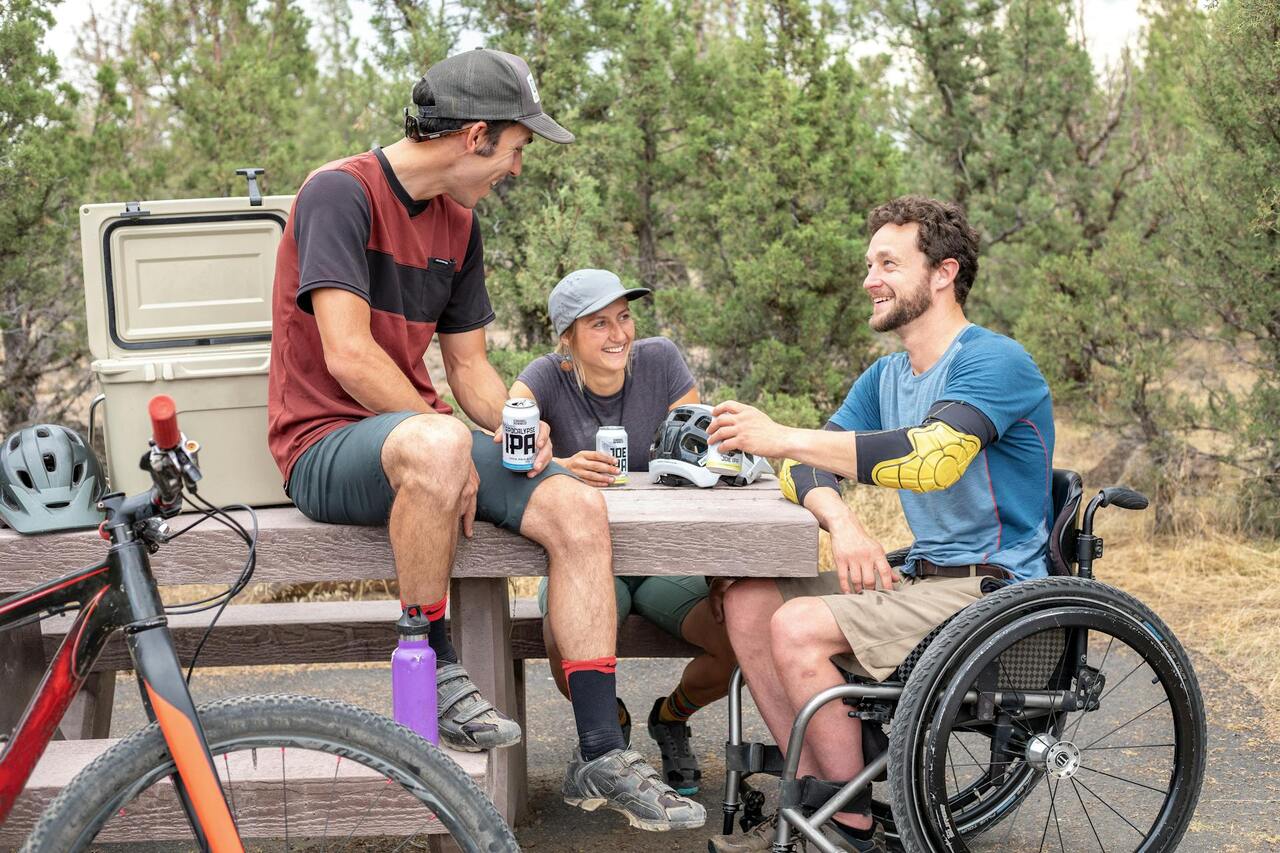
The narrative that hiking is an activity reserved only for the bipedal is outdated. As hiking as a subculture and hobby grows, there has been greater emphasis on developing and mapping accessible outdoor spaces means opportunities for wheelchair users can engage with wild landscapes.
Beyond the physical benefits of course, the value really lies in the immersion in nature – something many disabled people have been excluded from historically. It’s important for cognitive function and mental health to get fresh air and align your rhythm with the outdoors.
How to plan your trip
Successful accessible hiking is mostly going to hinge on the planning. Unfortunately, you can’t get away with improvising a trip. Trail research cannot be superficial either, as it requires a look into the technical specs.
Metrics like trail width, surface composition (asphalt, packed gravel, and boardwalks are going to be best), and, the gradient are going to be the main considerations. A variance of one or two degrees in incline can be the difference between a manageable challenge and an impassable obstacle.
Park websites often provide the most current accessibility data, though it depends on the country you’re in. Many European nations include the status of parking and restroom facilities. However, user-generated content on platforms like AllTrails, particularly photo submissions from other wheelchair users, can truly be the insight you want – or, at least, as a second layer of verification. It’s best to cross-reference this info with trail difficulty ratings.
If you want more bespoke help, you can book through the likes of Orbis Ways and ask them about the accessibility of a trip, and even request hotels that are rated well for accessibility (e.g. ramps, wide doors). For example, countries like Greece are often known for their lack of accessibility in urban areas (cars parked on sidewalks, for example), so here, it would be worth asking a book agency about the accommodation.
Gear to remember
Standard day chairs are rarely adequate for off-pavement travel. All-terrain wheelchairs, both manual and power-assisted, are going to be the baseline for serious hiking – unless you happen to find a very flat and well-paved hike.
Models with larger, pneumatic tires offer superior traction and vibration dampening compared to solid tires, so you don’t get frustrated by the movements. Accessories can also help, like front-wheel attachments (e.g., the FreeWheel) so it lifts the front casters to prevent snagging on obstacles. For manual chair users, specialised trekking poles can actually aid propulsion and braking on inclines.
Beyond the chair though, your pack should contain all the usual hiking staples, like a refillable water bottle, high-energy food (fats and protein), a first-aid kit and weather-appropriate clothing. Given the reliance smartphone maps, a power bank is also worth its weight.
Where is suitable?
You can certainly look for hiking trails that cater to these specs, but it is worth understanding the options and general situation. A lot of hikers enjoy the Med and Balkans, but these are often the least accessible places – even the cities can lack proper wheelchair-friendly infrastructure.
Heading towards Northern, Western and Central Europe might be your best bet. For example, Germany has tons of hiking trails of varying difficulties, along with some very robust infrastructure. But, avoid the trails that head into the southern mountains of course.
Specific trails like the Kilmuckridge to Morriscastle walking trail are explicitly designed to be wheelchair accessible. They feature concrete surfaces and no gates or stiles. Germany is a leader in accessible nature tourism, with national parks like the Eifel National Park and the Swabian-Franconian Forest Nature Park both featuring well-maintained trail networks. The “Wilder Kermeter” area in the Eifel National Park has a 4.7 km network of trails suitable for wheelchairs and handbikes. Some German parks even have offer rentals of all-terrain wheelchairs.
If you’re looking for lush rolling green hills landscapes and dairy farms, Ireland has many great trail options, but be selective about which ones you pick. But, of all nations in the world, Sweden is right up there with accessible hiking.
The journey itself
If you’ve never been before, the idea is to begin with shorter, less technically demanding trails. It builds your baseline, but more importantly, it establishes your limits. You can train and build on this, but you don’t want to rush into anything too difficult.
Hiking with a partner is a good safety measure and allows you to push for harder routes. It’s good to develop the habit of constantly checking the trail ahead and to be prepared to turn back if the terrain exceeds your pre-determined limits. Again, if you hike enough, you’re going to be let down by false information eventually about the trail.
The trail awaits
The wilderness is not off-limits – it just takes a little more planning. Looking in the right places and getting the help of a booking agency, you can quickly put together a hiking holiday that throws you into the natural world.


