


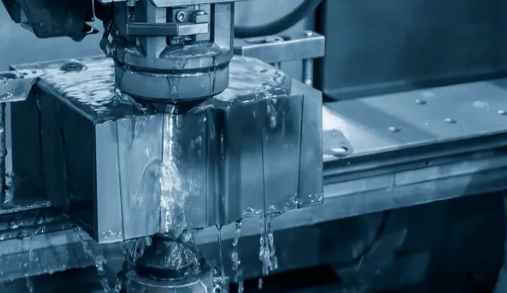
Wire Electrical Discharge Machining (EDM) is one of the most precise manufacturing methods. The accuracy and capacity to create detailed and delicate details on hard materials make this non-traditional machining technology, which uses electrical discharges (sparks), famous. Wire EDM uses a thin, electrically charged wire to erode material from the workpiece, resulting in high precision and low material waste. This process is ideal for aerospace, medical devices, and mold building, where tolerances and complicated geometries are crucial.
This article will explain why wire EDM is extremely precise, including its mechanisms, control considerations, and applications that benefit most from its capabilities.
What Is Wire EDM Cut?


Wire EDM cutting
Wire Electrical Discharge Machining (EDM) is a cutting-edge manufacturing technology that precisely shapes and cuts materials. The cutting tool in wire EDM is a thin, electrically conducting brass, copper, or tungsten wire. This wire continuously passes through the machine, causing fast electrical discharges (sparks) between the wire and the workpiece to erode the material.
A dielectric fluid, commonly deionized water, works as an insulator until the electrical potential ionizes and creates a spark. The dielectric fluid cools the workpiece and flushes away degraded material, ensuring a precise cut.
Wire EDM cut can create complex forms and precise details that standard machining cannot. It cuts tool steels, carbide, and superalloys excellently and creates complicated geometries and tight tolerances. Wire EDM is crucial in precision-intensive industries like aerospace, medical devices, and die and mold fabrication.
How Does Wire Cutting EDM Work
EDM uses a thin, electrically charged wire to cut conductive materials precisely by electrical erosion. The workpiece is fastened onto the Wire EDM machine‘s worktable during setup and programming. The CNC system guides the wire and worktable along the intended cutting path. Small brass, copper, or tungsten wire is threaded through the machine. The wire is taut and fed from the spool to maintain a sharp edge. A dielectric fluid, commonly deionized water, insulates, cools, and removes eroded particles from the workpiece and wire. The dielectric fluid protects the cutting process by chilling and hardening vaporized material into minute particles that are evacuated away from the cutting zone.
Cutting begins when an electrical voltage is placed between the wire and the workpiece. The wire sparks when its electrical potential exceeds the fluid’s dielectric breakdown strength as it approaches the workpiece. This spark heats the workpiece, melting and vaporizing a small amount. Rapid, repeating pulses ensure regulated material erosion. The CNC system carefully moves the wire and worktable along the programmed path to mold it. Wire tension, speed, voltage, and pulse duration are precisely adjusted to maximize cutting precision. Continuous wire feeding from the spool keeps the cutting edge sharp and uniform. Operation efficiency is maintained by collecting and recycling old wire.
The wire EDM method produces a smooth surface that requires little post-processing. The lack of mechanical force prevents workpiece distortion and stress, retaining dimensional accuracy. This precision allows wire EDM cutting company use wire EDM ideal for complicated forms, delicate details, and tight tolerances. It is used in aerospace, medical devices, precision tools, and die fabrication because it cuts hard and fragile materials without mechanical stress.
Why Is Wire EDM So Precise?
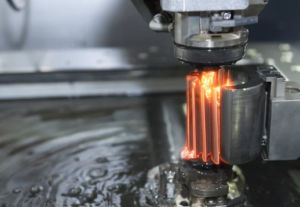

Wire EDM cutting
Here are some evidence to explain why wire EDM is so precise:
Non-Contact Machining
Wire EDM’s precision begins with its non-contact machining method. Traditional machining methods involve physical tools that exert mechanical force on the workpiece to cut or shape it. This can lead to issues such as tool wear, material deformation, and the introduction of stresses and defects into the workpiece. In contrast, wire EDM uses electrical discharges, or sparks, to erode the material without any physical contact. The wire, which serves as the cutting tool, is kept at a controlled distance from the workpiece, and the electrical discharges occur across this gap.
This non-contact approach offers several advantages. First, it eliminates the mechanical stresses and forces that can cause distortion or deformation, particularly in delicate or intricate parts. The absence of mechanical force ensures the workpiece retains its original properties and structural integrity. Second, the lack of tool wear means the cutting performance remains consistent, resulting in highly accurate and repeatable cuts.
CNC Control System
Wire EDM is a prison that heavily relies on the advanced capabilities of its Computer Numerical Control (CNC) system. This system allows precise control over the movement and positioning of the wire and the worktable, enabling the machine to follow complex cutting paths with exceptional accuracy. The CNC machining system is programmed with the desired design, which includes detailed instructions on the wire’s movement, speed, and electrical parameters.
The CNC system offers several key benefits for precision machining. It can make micro-adjustments in real time, compensating for any deviations or variations that may occur during the cutting process. This ensures that the wire follows the coordinates set in the design, maintaining the intended geometry and tolerances. The CNC system also allows for the automation of complex machining tasks, reducing the risk of human error and enhancing repeatability.
Thin and Continuous Wire Feed
Another critical factor contributing to the precision of wire EDM is the use of a thin and continuously fed wire. The wire used in EDM is typically very fine, with diameters as small as 0.02 mm. This fine wire allows for the creation small and detailed features, making wire EDM ideal for intricate and complex parts. The thinness of the wire also enables it to cut narrow kerfs, minimizing material wastage and allowing for closer tolerances.
The wire’s continuous feed is essential for maintaining consistent cutting performance. As the wire erodes during the cutting process, it is continuously replaced with fresh wire from the spool. This allows the cutting edge to remain sharp and wear-free, reducing the risk of inaccuracies due to dull or damaged wire. The wire’s continuous renewal helps achieve uniform cuts and a high-quality surface finish.
Thin and Continuous Wire Feed
Another critical factor contributing to the precision of wire EDM is the use of a thin and continuously fed wire. The wire used in EDM is typically very fine, with diameters as small as 0.02 mm. This fine wire allows for the creation of very small and detailed features, making wire EDM ideal for intricate and complex parts. The thinness of the wire also enables it to cut narrow kerfs, minimizing material wastage and allowing for closer tolerances.
The wire’s continuous feed is essential for maintaining consistent cutting performance. As the wire erodes during the cutting process, it is continuously replaced with fresh wire from the spool. This allows the cutting edge to remain sharp and wear-free, reducing the risk of inaccuracies due to dull or damaged wire. The wire’s continuous renewal helps achieve uniform cuts and a high-quality surface finish.
Role of Dielectric Fluid
The dielectric fluid, typically deionized water, plays a critical role in maintaining the precision of wire EDM. This fluid serves multiple functions: it acts as an insulator, coolant, and flushing agent. The dielectric fluid insulates the workpiece and the wire until the electrical potential is high enough to create a spark. Once the spark is generated, the fluid helps to cool the workpiece, preventing overheating and thermal distortion.
The dielectric fluid cools and removes eroded particles from the cutting zone, delivering a precise cut. Debris can hinder cutting and diminish precision; therefore, this prevents it. Dielectric fluid allows precise material removal by maintaining a steady and clean cutting environment. Its cooling reduces the workpiece’s thermal distortion and residual stresses, improving machining precision. The dielectric fluid is essential to wire EDM’s accuracy.
Capability to Cut Hard and Brittle Materials
Wire EDM is particularly suited for cutting hard materials that are complex to machines using traditional methods. Materials like tool steels, carbide, and superalloys can be precisely cut without inducing mechanical stresses that could lead to cracking or deformation. The non-contact nature of wire EDM, combined with its ability to generate controlled electrical discharges, allows it to erode material from even the hardest and most brittle workpieces without causing damage.
This precision cutting is a huge benefit for sectors that use hard and brittle materials. Superalloy aerospace components need accurate machining to work well in harsh circumstances. The medical device industry requires precision and material integrity for components that meet strict safety and performance standards. High-precision machining applications benefit from wire EDM’s ability to handle these difficult materials without compromising structural integrity or dimensional accuracy.
Conclusion
Wire EDM’s exceptional precision results from its non-contact machining process, advanced CNC control system, and the use of a thin, continuously fed wire. These factors eliminate mechanical stresses and ensure accurate, repeatable cuts. The dielectric fluid plays a crucial role by cooling the workpiece and removing debris, maintaining a stable and clean cutting environment. Additionally, wire EDM’s ability to machine hard and brittle materials without causing deformation makes it indispensable for high-precision applications. Together, these features make wire EDM a highly effective tool for achieving unparalleled precision in manufacturing.