


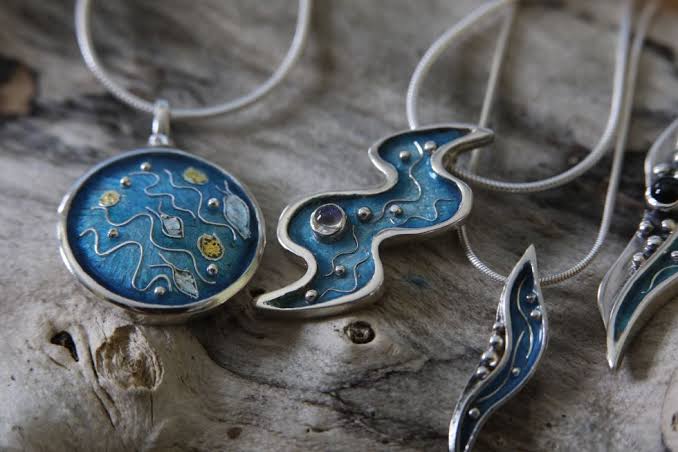
We are exposed to the technique of enameling every day. Enameling involves fusing glass to a metal substrate. It has many applications, including sinks, stoves, cookware, and building cladding. Using enameling on jewelry creates a beautiful, artful work of adornment.
Enameling has been an ancient art form since 1400 BCE. The art flourished in ancient Mycenae (1400 BCE), ancient Greece (600 BCE), the Byzantine Empire (8th-12th century CE), and the 19th and 20th centuries. Today, enamel jewelry remains popular. When shopping for jewelry, you may come across this technique. The enameling process can be done in various ways, and in this blog, we discuss all of them.
Cloisonné
Known for its intricate and detailed designs, cloisonné is one of the most well-known enameling techniques. Cloisonné comes from the French word “cloison,” which means “partition” or “compartment.”
Technique
1. Preparation: Typically, copper, brass, or silver are used as the starting materials. After bending and shaping thin metal wires into intricate designs, they are affixed to an object.
2. Filling: Different-colored enamels are placed inside the compartments created by wire partitions. Water or an adhesive is mixed with enamel powder to make the paste.
3. Firing: The piece is then fired in a kiln at temperatures ranging from 1,400 to 1,600 degrees Fahrenheit (760 to 870 degrees Celsius). This causes the enamel to melt and fuse to the metal surface.
4. Polishing: Smooth, glossy finishes are achieved after the piece is fired. In order to achieve the desired color depth, multiple firings may be required.
Applications
Cloisonné is often used in jewelry, decorative objects, and oversized items like vases and bowls. Its detailed and vibrant designs make it famous for creating intricate and colorful artworks.
Champlevé
Champlevé, another traditional enameling technique, involves carving or etching recesses into a metal surface and then filling these areas with enamel.
Technique
1. Carving: The metal object, typically made of copper or bronze, is carved, etched, or cast to create recessed areas.
2. Filling: These recesses are then filled with enamel paste.
3. Firing: The piece is fired in a kiln, melting the enamel into the recesses.
4. Finishing: After firing, the surface is polished, leaving the enamel flush with the metal surface.
Applications
Champlevé is commonly used in larger decorative pieces, such as plaques, medallions, and architectural elements. The technique allows for bold, colorful designs with a robust, textured surface.
Basse-taille
Basse-taille is a technique that combines metal engraving with enameling to create pieces with a stunning play of light and color.
Technique
1. Engraving: The metal surface, usually silver or gold, is engraved or etched to create a low-relief design.
2. Enameling: Transparent enamel is applied over the engraved surface. The varying depths of the engraving influence the shades and intensities of the enamel colors.
3. Firing: The piece is fired in a kiln, causing the enamel to fuse with the metal.
4. Polishing: After firing, the piece is polished to enhance the transparency and depth of the enamel.
Applications
Basse-taille is often used in high-quality jewelry and decorative objects. The technique’s ability to create a sense of depth and movement in the enamel makes it highly prized for artistic pieces.
Plique-Ã -Jour
Plique-Ã -jour is a challenging enameling technique that creates a stained-glass effect without a metal backing.
Technique
1. Framework: A metal framework is created, similar to cloisonné but without a solid backing.
2. Enameling: The compartments are filled with translucent or transparent enamel.
3. Firing: The piece is carefully fired to fuse the enamel to the metal framework without melting the supporting structure.
4. Finishing: If used, the temporary backing is removed, leaving a delicate, glass-like piece.
Applications
Plique-Ã -jour is often used in jewelry, particularly in items like earrings and pendants, where light can pass through the enamel, creating a luminous effect. Its delicate and intricate nature makes it one of the most sought-after enameling techniques.
Painted Enameling
Painted enameling, also known as enamel painting or Limoges enameling, involves painting a design directly onto a metal surface with enamel paints.
Technique
1. Base Layer: A white or light-colored enamel base layer is applied to the metal surface and fired.
2. Painting: Enamel paints, which are finely ground glass mixed with oils or water, are applied to the base layer using brushes. The design can include multiple colors and intricate details.
3. Firing: The piece is fired at a lower temperature than other enameling techniques, often in multiple stages to set each layer of paint.
4. Finishing: After the final firing, the piece is polished to enhance the colors and smooth the surface.
Applications
Fine jewelry, decorative plaques, and portrait miniatures are all made from painted enamel. Due to its high degree of artistic expression and detail, this technique is ideal for intricate designs.
Final Thoughts
Enameling is a versatile and beautiful art form with a rich history and various techniques. From the intricate wirework of cloisonné to the delicate translucence of plique-à -jour, each method offers unique possibilities for creativity and expression. Whether you’re a collector, an artist, or simply an admirer of fine craftsmanship, understanding these different enameling techniques can deepen your appreciation for this timeless art.