


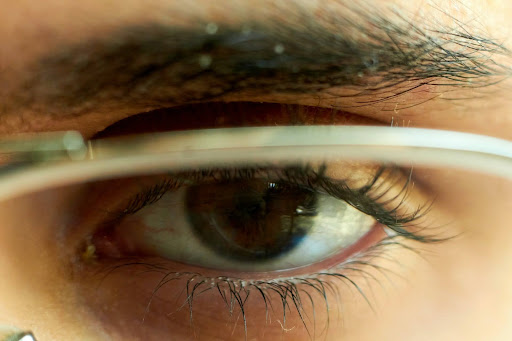
Myopia is one of the most common eye conditions in the world and one of the most consistently undermanaged. The short-sighted person who squints at road signs, avoids sitting toward the back of rooms, and has stopped mentioning that they cannot quite make things out anymore is not a rare case. They are a very common one, and the daily compromises they are making add up to a lifestyle that is quietly smaller than it needs to be.
Uncorrected myopia does not just blur distant objects. It shapes how a person moves through the world, what they choose to do, and how much effort everyday life requires.
What Myopia Actually Does
Short-sightedness occurs when the eye focuses light in front of the retina rather than on it, typically because the eyeball has grown slightly too long. Close objects remain clear. Anything at a distance becomes progressively blurred depending on the degree of the condition.
For mild myopia, the blurring is an inconvenience. For moderate to high myopia, it is a significant functional limitation. A person with uncorrected moderate short-sightedness cannot read a whiteboard from the middle of a classroom, recognise a face across a room, or see a road sign clearly enough to act on it in time. Distance glasses correct this by adjusting where the focal point lands, bringing distant objects into clear focus without affecting near vision.
The correction is straightforward. The decision to seek it, and to keep the prescription current as the condition progresses, is where many people fall short.
The Daily Activities That Suffer Most
Driving
Driving with uncorrected or poorly corrected myopia is one of the more serious practical consequences of not wearing distance glasses. Road signs, traffic signals, hazards at distance, and the general spatial awareness required for safe driving all depend on clear distance vision. In the UK, a visual standard of at least 6/12 on the Snellen scale is required to hold a driving licence, and many short-sighted people are not aware they are below that threshold until an eye test makes it explicit.


The person who avoids motorways, feels anxious driving at night, or relies disproportionately on GPS because road signs are difficult to read in time, is often managing unacknowledged myopia rather than a general preference for cautious driving.
Sport and Physical Activity
Team sports, racquet sports, cycling, and most outdoor physical activities require clear distance vision for performance and safety. A short-sighted person playing football without correction cannot read the position of players across the pitch. A cyclist cannot assess road conditions ahead at speed with the same accuracy as someone with corrected vision.
The practical response for many people is simply to do less of these activities, or to accept a lower level of performance within them, without connecting the limitation to vision. For contact lens wearers, sport is one of the clearest use cases for correction, since distance glasses are impractical in contact sports and active conditions.
Social Situations
Uncorrected myopia affects social confidence in ways that are rarely discussed but consistently reported by people who have had their vision corrected for the first time. Not recognising someone across a room and appearing to ignore them. Missing facial expressions and body language that communicates nuance in conversation. Feeling uncertain in unfamiliar environments because spatial layout is not clearly readable at distance.
These experiences accumulate into habits of behaviour that persist even after the practical cause has been addressed. People who spent formative years with uncorrected short-sightedness often describe the social adjustments they made without realising they were making them.
When Myopia and Presbyopia Overlap
Short-sighted people who reach middle age encounter an interesting complication. Presbyopia, the age-related stiffening of the crystalline lens that makes near focus harder, affects short-sighted people too but in a counterintuitive way. Removing distance glasses to read at close range becomes a useful workaround for many myopic presbyopes, because the short-sightedness provides natural magnification at close range that the presbyopia has taken from those with normal distance vision.
This workaround stops being adequate as presbyopia progresses and as the myopia itself continues to change. The point at which managing two separate conditions with one improvised solution becomes genuinely inconvenient is usually when varifocal or bifocal correction enters the conversation.
Eye Strain as a Consistent Companion
People with uncorrected myopia typically experience higher levels of eye strain than those whose vision is correctly corrected, because the eye is continuously attempting to compensate for the blurring through a combination of squinting, changing head position, and increasing focusing effort. This sustained muscular effort produces the headaches, fatigue, and end-of-day heaviness that many short-sighted people accept as normal when they are in fact a direct consequence of an unaddressed prescription.
Lubricating eye drops help with the surface discomfort that accompanies extended visual effort, but they address the symptom rather than the cause. The cause is a prescription that is either absent or no longer accurate, and the most direct route to resolving the eye strain is correcting the underlying condition with the right distance glasses.
The Role of Regular Eye Tests
Common eye problems including myopia, presbyopia, and astigmatism are all identifiable through a standard eye test, and all respond well to optical correction when identified. The difficulty is that myopia in particular tends to progress gradually enough that the person wearing the correction adapts to incremental changes without noticing them clearly, and the prescription that was accurate two years ago may no longer be serving them adequately.
Annual eye tests are worth building into the routine for myopic patients, particularly during the teenage years when progression tends to be fastest and in the mid-forties when the overlap with presbyopia begins to complicate the correction picture.
Buying updated distance glasses or exploring glasses online once the prescription is confirmed does not need to be complicated or expensive. What matters is keeping the correction matched to the eye rather than wearing a prescription that the eye has grown beyond.
The Bottom Line
Uncorrected myopia is not a minor inconvenience. It limits how safely a person can drive, how fully they can participate in sport and social life, and how much daily effort their visual system is spending on a problem that a current pair of distance glasses would resolve. The correction is available, the technology to access it is increasingly straightforward, and the lifestyle return from wearing the right prescription is one of the most immediate and practical improvements most short-sighted people can make.