


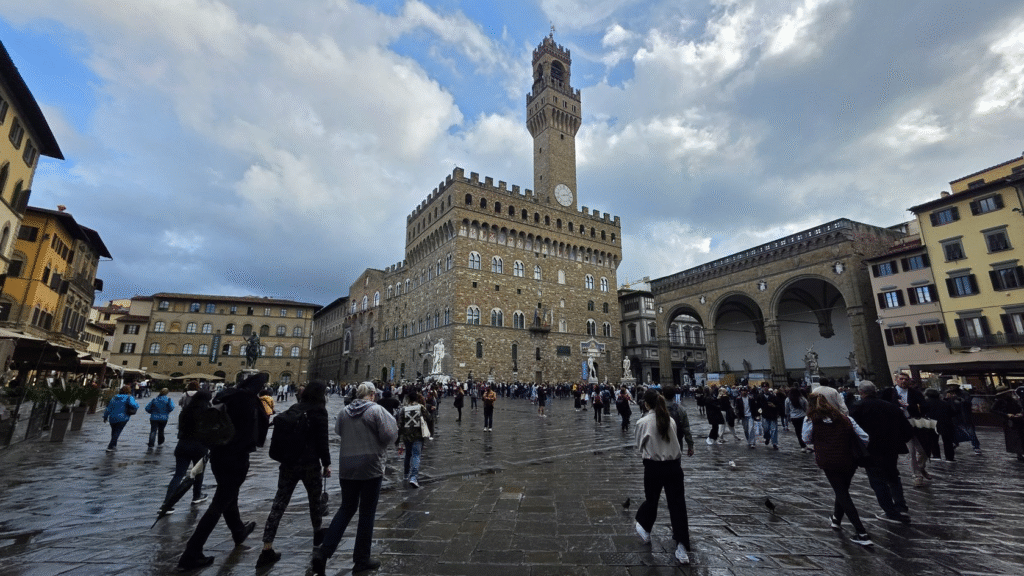
Florence rewards slowness. You can sprint from the Duomo to the Ponte Vecchio and collect photos—or you can let the city open one layer at a time: a bell tower heard from a side street, a bronze door detail you’d have missed, the light on stone at the end of the day. This guide helps you shape a Florence tour that balances masterpieces and small moments, so you leave with stories—not only pictures.
Start with your rhythm, not with a list
Ask one question first: how do you want the day to feel? If you arrive with fresh energy, begin in the centre where landmarks are close; if you’re landing from a flight or travelling with kids, start across the river where the pace is softer and cafés have more space between tables. The route follows the rhythm.
Three mini-itineraries that siply work
1) first-timer classics (compact and human-paced)
- Duomo area: walk the piazza before crowds build; circle the Baptistery for the bronze doors. If you plan to climb or visit museum areas, book ahead via the Opera del Duomo’s official portal: Museo, Dome & Campanile tickets.
- Piazza della Signoria → Uffizi: cross through the statues’ “open-air room” toward a timed entry at the Uffizi (mid-morning is kind). Reserve on the official site: Uffizi Galleries.
- Lunch: keep it simple—Mercato Centrale upstairs for choice, or a tiny trattoria two streets off the main avenues.
- Ponte Vecchio → Oltrarno: cross after lunch when light warms the river; aim for a gelato and a short rest in a quiet square.
2) art-first (deep, not wide)
- Accademia(timed entry): meet David early; then spend time with the unfinished Prigioni to understand Michelangelo’s process.
- Uffizi focus path: Botticelli rooms, then a quick leap to Leonardo, Michelangelo, Caravaggio—skip corridors that don’t call you.
- Quiet end: San Miniato al Montefor late-afternoon light and Gregorian chant (check times), or Bardini Garden for a green pause above the roofs.
3) oltrarno slow (workshops, courtyards, lived-in streets)
- Santo Spirito → artisan lanes: watch a woodcarver or a bookbinder at work; many studios welcome short visits.
- Brancacci Chapel(reservation recommended): stand close to Masaccio’s frescoes and feel how painting turns a corner here.
- Late day: drift back toward the river; golden hour on the Ponte Santa Trinitaframes the Ponte Vecchio without crowds.
Timed entries without stress
- Choose one major reservation in the morning, another later (mid-afternoon is calmer).
- Leave 90 minutesbetween timed entries so you can stop when something unexpected pulls you in.
- Carry one small noteof what you’d skip if time shrinks; Florence rewards flexibility more than ambition.
Eating well without losing the day
- Book lunch near your next stop, not the last.
- Prefer seasonal plates(ribollita in cold months, panzanella in heat) to “greatest hits” menus.
- If you’re short on time, a panino al lampredottois culture and fuel in five minutes—ask for “salsa verde, piccante, bagnato”.
Weather and crowds: simple tactics
- Heat: churches and museums are natural cool rooms—alternate outdoors and indoors.
- Rain: the city shines in reflections; keep a small foldable umbrella and plan longer museum windows.
- Crowds: step one street off any main artery; Florence is a grid of parallel calm.
Small places that change the day
- Orsanmichele: grain market turned church—statues outside, silence inside.
- Chiostro dello Scalzo: monochrome fresco cycle, often empty.
- Biblioteca delle Oblate terrace: coffee with a Duomo view, mostly locals.
Common mistakes (and how to avoid them)
- Over-scheduling: three “must-sees” are enough; leave room for detours.
- Skipping reservations entirely: book Uffizi/Accademia; keep the rest spontaneous.
- Eating on the main squares: beautiful to pass through, better to dine two streets away.
- Forgetting sunset: choose one overlook—San Miniatoif you like quiet, Piazzale Michelangelo if you want the postcard.
A pocket plan to copy tomorrow
Morning: piazza Duomo walk → timed entry (Uffizi or Accademia) → coffee.
Midday: cross the river for lunch → artisan lane wander.
Afternoon: a second, shorter museum or a chapel with reservations.
Evening: golden-hour view → dinner within a five-minute walk of your door.
If you want a route that fits your timing, tickets and energy—not just the map—start here: Florence tour. We’ll help you connect the obvious highlights with the small, quiet places that make the city feel like yours.