


Everest trekking is a dream of many travellers, given the chance to get an up-close view of the highest mountain in the world. Additionally, it also brings an opportunity to explore an authentic himalayan lifestyle, Sherpa culture, and varying landscapes. However, the trek has a long duration (12 to 14 days) and reaches well above the elevation of 5,000 meters. Since the trek is moderately difficult and has fair chances of Acute Mountain Sickness, it may not be suitable for older travel enthusiasts. Similarly, it is not ideal for trekkers with a short time frame either.
Therefore, they should opt for the alternatives that are less physically demanding and of shorter duration. Some of the most famous options include the Everest Base Camp Trek with Helicopter Return, the Everest helicopter landing tour, the Everest Heli Flyover, etc.
Challenges of The Classic Treks
There are a few aspects of the iconic Everest Base Camp journey that make it less suitable for elderly citizens. Here is a brief description of some of them.
Long walking hours
On a daily basis, trekkers have to trek for about 5 to 7 hours. Furthermore, it continues for 12 to 14 days, leading to muscle and joint strain and fatigue. Even though well-established, the trails are uneven and comprise steep ascents and descents, demanding good stamina. Therefore, the trek can be slightly difficult for elderly citizens. So, they should acclimatize properly, ascend slowly and steadily, and hire a licensed trekking guide.
High Altitude
The maximum elevation of almost every trek in the Everest region reaches above 5,000 meters. Therefore, there are significant risks of Acute Mountain Sickness. Trekkers can experience symptoms from mild ones, such as headache, nausea, dizziness, and fatigue, to severe ones, like loss of coordination, breathlessness, and blurry vision.
Descent after the trek
Many trekkers underestimate the challenges of returning to Kathmandu. For example, after reaching the base camp, you still have to walk for about 4 to 6 days, which causes strain on the ankles and knees. Furthermore, as your body is already tired, there are more chances of losing your balance and tripping and falling.
Everest Base Camp Trek and Helicopter Return
For older and leisure travellers it is the best alternative to the traditional journey. It offers a perfect balance of trekking, scenic beauty, and convenience. Additionally, it exchanges the descent days with a scenic helicopter flight, which is only about 45 to 90 minutes long. Therefore, it decreases the duration of the trek and reduces the physical demands as well.
Trekkers do not have to miss out on any key experience or viewpoint either. They walk through picturesque villages such as Namche Bazaar, Tengboche, and Dingboche. Additionally, the teahouse accommodation along the way brings out opportunities to interact with the locals and observe their lifestyle. Walking through the Sagarmatha National Park, trekkers may spot unique wild animals, vegetation, and birds. Throughout the journey, shifting panoramic views of Nuptse, Lhotse, and Ama Dablam enhance the scenic appeal.
Arriving at the base camp provides a majestic sight of Mt. Everest and the Khumbu Glacier. Most of the itinerary includes a hike up to Kala Patthar to witness the golden sunrise reflecting on the surrounding mountain peaks. In the classic journey, you would walk down, but in this trip, you fly directly from Gorak Shep to Kathmandu.
In conclusion, this option minimizes the physical challenges of the trek and shortens the duration, making it a good alternative for trekkers with limited time and older travel enthusiasts.
Everest Tour via Helicopter
Several old people are not physically able to trek continuously for about a week. Likewise, there are people who want to explore the region in just a single day, which is possible with a guided helicopter tour. Both of these trips are just a few hours long, saving a significant amount of time compared to trekking. It is not as thrilling as trekking the Everest region, but it does provide an aerial view of the Khumbu region. Passengers can see the villages, forests, himalayan valleys, glaciers, and breathtaking views of the giant mountains.
Everest Heli Landing Tour
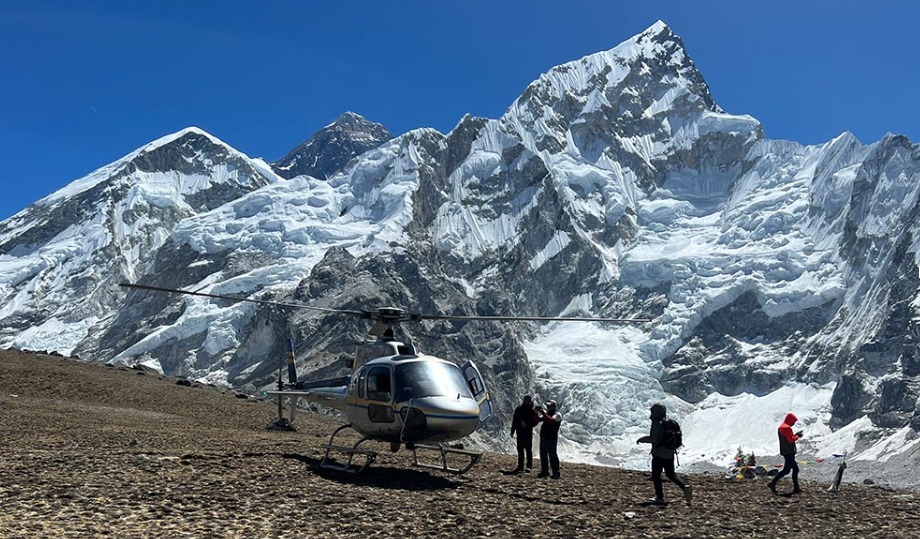
It involves aerial exploration of the Khumbu region, along with a landing at a designated viewpoint (usually Kala Patthar). Trekkers spend about 30 minutes here and soak in the sweeping views of the surrounding himalayas. After that, the helicopter flies to the Hotel Everest View, where you enjoy a warm breakfast amidst the snow-capped mountains. The trip ends with flying back to Kathmandu the same day.
Everest flyover tour
This option is even shorter than the landing one, as it does not include stopping at any viewpoints. It starts with a helicopter pickup from Kathmandu and then flying to Lukla, which takes about 30 to 45 minutes long. After that, the shuttle flies to Pheriche above the villages, such as Namche Bazaar and Dingboche. Trekkers can see aerial views of the Dorje Himal, Nuptse, Lhotse, and other peaks. After flying above the beautiful Everest region, the helicopter flies towards the Hotel Everest View. Enjoy a delicious breakfast here and then return to Kathmandu via Lukla.
Note: From Kathmandu a helicopter usually carries 5 passengers. However, it can only have 3 people beyond Phireche. So, first the 3 people fly to Kala Patthar while the other two wait for their turn. Furthermore, this also ensures that everybody gets a window view of the region.