


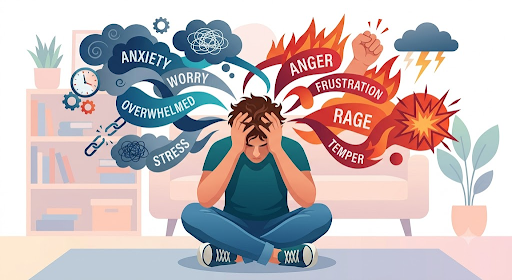
Anxiety and anger problems can feel confusing because these emotional reactions may seem unrelated. Anxiety often creates fear, tension, and a sense that something is wrong, while anger may appear as irritation, defensiveness, or sudden conflict.
In many cases, both reactions come from the same sense of threat or loss of control. Understanding this pattern can help you notice warning signs earlier and respond before emotions take over.
How Anxiety Can Turn Into Anger
The connection between anxiety and anger problems often begins when the nervous system detects danger. The threat may be real, imagined, or based on uncertainty. Your body prepares to protect you through the fight-or-flight response. This can cause muscle tension, faster breathing, an increased heart rate, and changes in blood pressure.
Some people withdraw when this happens. Others become impatient, defensive, or confrontational. The reaction may be more likely when you feel trapped, misunderstood, rushed, or unable to solve a problem.
Common signs include:
- Snapping at people over small mistakes
- Feeling restless or unable to relax
- Becoming defensive during simple conversations
- Replaying conflicts after they end
- Experiencing angry outbursts during stressful periods
Signs That Both Problems Are Present
Anxiety disorders and anger problems can overlap, but they may not look the same in every person. One person may become quiet and resentful. Another may argue, raise their voice, or leave situations abruptly. Look for repeated patterns rather than focusing on one isolated reaction.
Anxiety may appear before, during, or after conflict. You might worry about losing control, fear being judged, or regret what you said. A person with panic disorder may also become irritable when physical symptoms feel overwhelming or unpredictable.
| Anxiety Signs | Anger Signs |
| Excessive worry, avoidance, tension, or fear | Irritability, blame, harsh speech, or confrontation |
| Racing thoughts or trouble focusing | Difficulty pausing before reacting |
| Sleep problems and physical unease | Outbursts of anger or damaged relationships |
The phrase “anxiety and anger” describes an emotional overlap, not a single diagnosis. An assessment with Anat Joseph, LCSW, can help determine whether stress, trauma, depression, substance use, sleep loss, or another concern is contributing.
Why Triggers Feel So Intense
Does anxiety cause anger problems? Anxiety can contribute to anger problems, especially when it remains unrecognized or untreated. Fear can make ordinary situations feel threatening. A delayed message may seem like rejection. Feedback at work may feel like criticism. Noise, crowds, traffic, or sudden changes can make emotional control harder.
Other triggers include poor sleep, hunger, overstimulation, financial pressure, family conflict, and repeated uncertainty. These factors can reduce your ability to slow down and consider other explanations.
People may also carry feelings of anger for hours without expressing them clearly. That tension can build until a small event triggers intense anger. In some cases, expressed anger brings brief relief, followed by shame, guilt, or more worry.
Recognizing these links can help you connect present reactions with specific triggers, beliefs, and past experiences without treating every emotional response as a character flaw.
What to Do During an Escalation
When emotions rise quickly, the first goal is not to solve the entire problem. Focus on lowering physical activation so you can think clearly.
Try these steps:
- Pause the conversation when it is safe.
- Breathe out more slowly than you breathe in.
- Name the feeling and its trigger in one sentence.
- Move to a quieter space for a few minutes.
- Use physical activity, such as walking, to release tension.
- Return when your voice and body feel steadier.
Avoid sending hostile messages, making threats, driving aggressively, or using alcohol to calm down. These choices can create consequences that increase anxiety later.
Can anger lead to anxiety or anxiety disorders? Repeated conflict can create fear about future arguments, relationships, work, or losing control. This can form a cycle in which anxiety raises tension and anger creates new reasons to worry.
Building Better Daily Responses
Effective anger management begins before a crisis. Track when reactions happen, what you were thinking, how your body felt, and what you did next. Patterns often become clearer after one or two weeks.
Treat sleep as an important part of emotional care. Fatigue reduces patience and makes perceived threats harder to evaluate. Regular meals, scheduled breaks, and lower caffeine intake may also help.
Ask yourself:
- What facts support my first interpretation?
- Could there be another explanation?
- What response would protect the relationship?
- Will this matter tomorrow?
- What do I need to communicate clearly?
These skills take time. Long-term improvement depends on repetition, honest reflection, and support rather than an attempt to suppress every emotion.
How Therapy Can Help
Therapy can help you understand the link between anger and anxiety, identify triggers, and practice new responses. Cognitive behavioral approaches may help you challenge threat-based thoughts. Grounding and breathing skills can reduce physical activation. Communication work can help you express needs without attacking or withdrawing.
A mental health professional may also assess whether trauma, depression, attention difficulties, substance use, or another condition is affecting your reactions. Treatment should be evidence-based and tailored to your symptoms, goals, and level of risk.
Mental health services may be especially helpful when reactions affect work, parenting, close relationships, or personal safety. You do not need to wait until a crisis occurs before seeking support.
When to Seek Immediate Support
Seek help promptly if anger includes threats, physical aggression, property damage, reckless behavior, or fear that someone may be harmed. Frequent episodes, increasing severity, or difficulty calming down are also strong reasons to seek support.
You should also seek support when anger issues lead to isolation, job problems, relationship breakdown, or constant regret. These patterns are treatable. My Psychotherapy can help you understand what drives the reaction, build safer coping skills, and create a plan for lasting emotional control.