

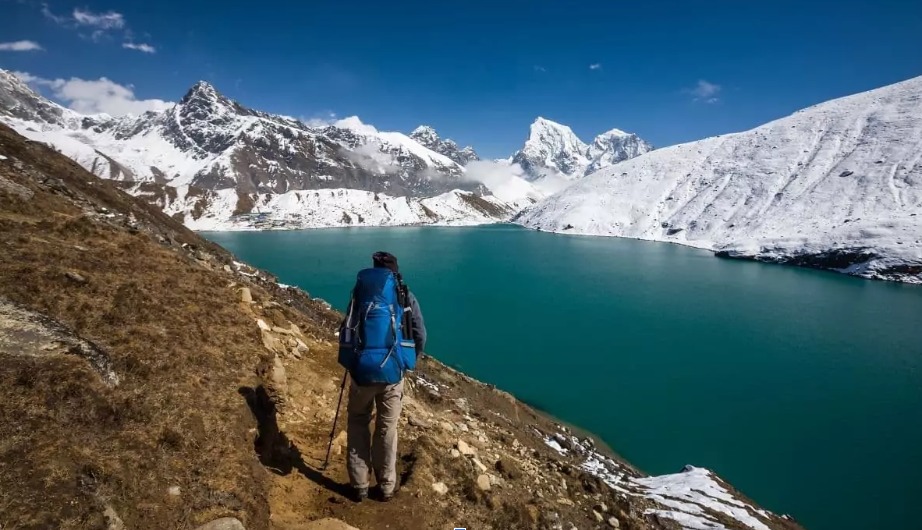
Travelers around the world seek the Khumbu region for Himalayan adventures. Be it Himalayan treks, climbing peaks, or expeditions to some of the tallest mountains in the world, it offers everything. Trekkers get to walk through the varying landscapes, explore the Sherpa culture of the region, and witness some of the most captivating panoramic views of the snow-covered mountains. Additionally, the region is also home to the highest freshwater lake cluster in the world. Trekkers can witness the sight of their turquoise beauty by opting for the Gokyo Lakes Trek.
If you want to challenge yourself, then you should consider combining it with the Island Peak Climbing. It is located right above the Imja Valley and is one of the most popular trekking peaks. So, it is an ideal option for seasoned trekkers looking to start their mountaineering journey. Doing so allows travelers to witness the beautiful hills, terraced farmlands, traditional villages, alpine meadows and summit a peak at once. With that, here is a comprehensive guide to planning this journey.
Why Combine The Two?
Scenic Rewards
During the trek, the primary highlight is the breathtaking water bodies. This comprises the Longponga Tsho, Taboche Tsho, Gokyo Cho (Dudh Pokhari), Ngozumpa Tsho, and Gyazumpa Tsho. Additionally, trekkers climb the Gokyo Ri and get the sweeping views of Everest, Makalu, and Lhotse. They walk through the traditional Sherpa villages and have the opportunity to explore their cultural and traditional practices. Likewise, the lower region’s trails consist of the rhododendron, oak, and pine forests. In higher regions, they walk along the Ngozumpa glacier. They can also witness the alpine meadows and the Himalayan Valleys. Similarly, from the summit of Island Peak, climbers can get sweeping views of some of the tallest mountains in the world.
Acclimatization
The highest elevation reached while trekking is 5,357 meters. Similarly, along the way, trekkers gain the elevation gradually, which helps with acclimatization. While walking, trekkers can assess their physical and mental endurance. This helps them plan the resting points better on the climb. Moreover, their bodies adapt better to the changing environmental conditions due to enough prior exposure. This increases the chances of a successful summit of the peak.
Suggested Route
- Take a flight from Kathmandu to Lukla and then trek to Phakding.
- Trek to Namche Bazaar.
- Acclimatization day
- Trek to Dole
- Walk to machhemro
- Trek to Gokyo Lakes
- Hike to the top of the Gokyo Ri
- Trek to Thagnak
- Cross the Cho La pass and head to Dzongla
- Trek to Lobuche
- Head towards Chukkung
- Take an acclimatization day
- Trek to the Island Peak
- Summit the peak
- Return to Chukkung
- Trek to Namche Bazaar
- Head towards Lukla and take a flight to Kathmandu
Permits
For trekking
Trekkers need to obtain two permits for Gokyo Lakes. First, the Sagaramatha National Park Entry Permit (SNP). It is 3,000 Nepali rupees per person for a single entry. There are two places to obtain it: the Nepal Tourism Board Office or the park entrance gate at Monjo. Trekkers need to provide a valid passport, Nepali visa, passport-size photographs, and a detailed itinerary.
The fund collected from this permit goes back to the protection of the flora and fauna of the national park and its maintenance.
Second, the Khumbu Pasang Lhamu Rural Municipality permit. It is a local permit that is required to trek inside the Khumbu region. It costs 2,000 Nepali rupees per person and is valid for a single trip. You may obtain this from the permit counter at Lukla or at Monjo.
For Climbing
To summit the Island Peak, travelers need to obtain the specific climbing permit that is issued by the Nepal Mountaineering Association (NMA). This makes sure you summit the mountain legally and follow the government rules and regulations. Its prices vary with the season; in spring, it is $350, and in autumn, winter, and monsoon, it is $175. You have to submit an application to the NMA to obtain these permits. This process is usually handled by your tour operator.
Difficulty Level and Experience Required
The combined trip is moderate to challenging, depending on your fitness and experience. If you are an experienced trekker, it is a moderately demanding endeavor for you. Whereas, if you are new to Himalayan adventure, then this adventure will be challenging.
Trekking Experience
While not mandatory, it can be very beneficial. The trekking section of this combined journey also passes through remote sections and reaches significant elevation. Therefore, trekkers should be familiar with the Himalayan weather, changing landscapes, and high-altitude trekking. Similarly, it requires walking for about 5 to 7 hours on average, which demands good physical as well as mental stamina. At the higher sections, trekkers have to cover a few uneven, rocky, and rugged sections. This needs proper gear and careful footing.
Climbing Experience
Despite being 6,189 meters, Island Peak is technical. It requires the climbers to navigate through thick sheets of ice and snow, sharp and steep sections, and crevasses. Moreover, at such a high elevation, the weather conditions change in the blink of an eye, regardless of the weather. A climber should have basic mountaineering knowledge and operate a few technical tools. They should be familiar with glacier travel; this requires them to use ropes and walk on ice using crampons. Similarly, they need to know how to secure themselves using a harness and carabiners. Some other common tools include ice axes and gaiters.
Safety Tips
- Always stay updated with the weather forecast and pause the adventure during harsh conditions.
- Acclimatize enough and avoid rapid elevation gain.
- Stay hydrated and consume nutritious and well-cooked meals.
- Avoid smoking or drinking.
- Hire an expedition leader who has summited more technical peaks before.
- Get comprehensive travel insurance from a trustworthy insurer and make sure it covers emergency helicopter evacuation and hospitalization.
- Do not push through the mild symptoms; instead, inform your guide or expedition leader and rest until you feel better or descend if the symptoms worsen.
- It is better to travel in a group to improve safety and have immediate help.